

CALAMBA CITY, Laguna (PIA) — The Technical Education and Skills Development Authority (TESDA) continues to strengthen its international partnerships and cooperations to enhance technical-vocational education and create more global opportunities for skilled Filipino workers.
During the WorldSkills Philippines Calabarzon opening ceremony in Calamba City, Laguna, on May 25, TESDA Deputy Director General for TVET Partnership and Linkages Nelly Nita Dillera emphasized that the agency’s partnerships extend beyond local enterprises and academic institutions, reaching organizations and training institutions worldwide.
“We have many partners not only among enterprises and academic institutions in the Philippines, but even worldwide. Regular visitors come to the Philippines and benchmark what we do. They see our TESDA Women’s Center and the strengths of our regional centers,” she said.
Among the areas being explored for partnership are program development, updating of training content, sharing of equipment, and deployment of experts who can help improve the competencies of Filipino trainees.
Dillera noted that some international partners are also willing to share existing certification programs that TESDA may adopt to help Filipinos acquire globally recognized credentials more efficiently.
“These partnerships start with exploratory talks where we see what they have, and they also check what we have. Then we begin discussing areas where we can partner,” Dillera said.
She then added, “Some partners are willing to share their programs, their equipment, and even experts because they are looking for skilled Filipinos who can eventually become part of their workforce.”
Under the administration of President Ferdinand R. Marcos Jr. and TESDA Secretary Francisco Kiko Benitez, promoting TVET as a viable pathway for progress, and a vital part of this is TESDA’s coordination and engagement with industries to employ individuals with National Certifications.
Through global partnerships, it improves the competitiveness of Filipino workers as industries worldwide continue to demand highly skilled and internationally certified professionals. TESDA is optimistic that Filipino trainees’ access to updated technologies, modern training systems, and globally aligned standards leads to an increase in their chances of securing quality employment both in the country and overseas.
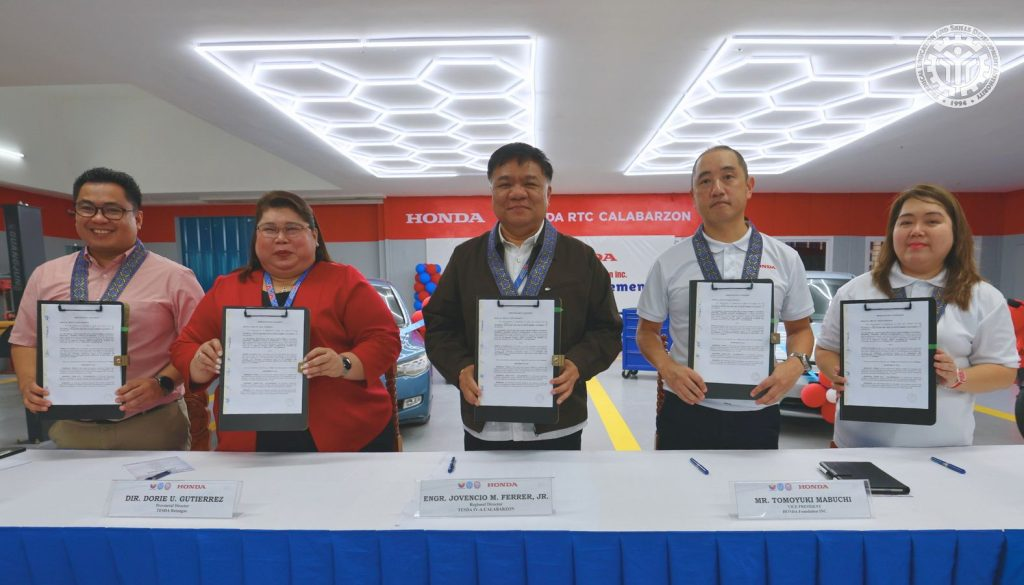
The partnerships are formalized through Memoranda of Agreement (MOA), Memoranda of Understanding (MOU), and transnational education and training programs that allow certifications earned in the Philippines to be recognized abroad.
“One example would be the ASEAN Mutual Recognition Agreement. Workers can bring their Philippine certificates and have them recognized by schools and institutions in other countries,” Dillera explained.
She added that these partnerships also help ensure that Philippine technical-vocational education remains responsive to global industry needs, particularly in sectors such as tourism, healthcare, construction, manufacturing, and information technology where Filipino workers are highly recognized. (AM/PIA CALABARZON)