

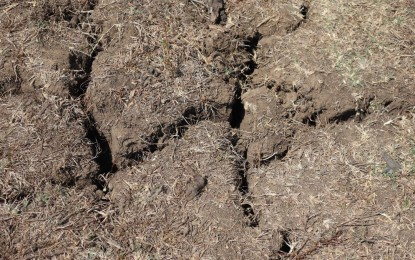
MANILA – The Department of Agriculture (DA) on Tuesday underscored the need to advance data-driven planning and faster execution of programs ahead of another El Niño episode expected to peak in November.
Agriculture Secretary Francisco Tiu Laurel Jr. made the call after the agency posted better results in internal assessments and evaluations by the Commission on Audit (COA) and the Department of Budget and Management (DBM) for the first half of 2026.
In a statement, Laurel urged DA personnel to sustain such momentum as the government braces for looming weather and food security challenges.
“Preparedness prevents a challenge from becoming a crisis, and a crisis from deteriorating into a catastrophe. That must be our guiding principle in the months ahead,” he said.
Tiu Laurel said the government has more lead time than it did during the previous El Niño episode and should utilize that window to ensure that mitigation measures are in place.
He also noted that external conditions have become more favorable, with eased fuel and fertilizer prices.
By August, domestic retail prices are expected to return to near pre-US-Iran-war levels of PHP1,600 to PHP2,000 per bag, according to the DA.
Tiu Laurel said the lower input costs will help encourage farmers to maximize planting before the dry spell intensifies.
He also ordered the Department to fast-track irrigation, water impounding and other climate adaptation projects, including small farm reservoirs that can also support fisheries and provide farmers with additional food and income.
Beyond immediate climate preparations, Tiu Laurel outlined a broader shift toward a food systems approach where production, storage, logistics, weather information and market demand are managed as one integrated network supported by real-time data.
Modernized facilities like additional cold storage, blast freezers, and logistics facilities are also seen to preserve local harvests, and help meet domestic demands, as well as reduce import dependence.
The DA chief also directed regional offices to identify each province’s strongest agricultural and fisheries commodities, quantify production capacity, and measure post-harvest losses to guide investments in storage, processing, and cold chain infrastructure. (PNA)