

MANILA – The Department of Energy (DOE) is implementing additional measures to help cushion the impact of oil supply issues, including the fast-tracking of net metering application processes.
DOE, in a news release Wednesday, said distribution utilities (DUs) and electric cooperatives (ECs) are required to finish the processing at their end within 10 days, while local government units (LGUs) are required to accomplish it within three working days.
This is among the programs in line with issuance of Executive Order (EO) No. 110, which declared a state of national energy emergency due to the ongoing conflict in the Middle East, which has hampered the transit of oil supply from that region.
DOE said before the issuance of EO 110, “DUs and ECs had 20 working days to complete the processing of net metering applications, while the prescribed period for LGU approvals varied per permit.”
Under the net metering program of the DOE, power consumers with the capacity to install their own power sources, such as solar panels, may do so, and their surplus power of up to 100 kilowatts (kW) may be transferred to the grid to boost supply in exchange for credits on their monthly electricity bill.
“Every unnecessary delay in net metering is a delay in savings for Filipino consumers,” Energy Secretary Sharon Garin said.
“Under the directive of President Ferdinand R. Marcos Jr. through Executive Order No. 110, we are pushing faster, simpler, and more responsive approval processes so that more households and businesses can benefit from rooftop solar, lower their electricity bills, and strengthen their resilience against global energy price shocks.”
Fuel station monitoring
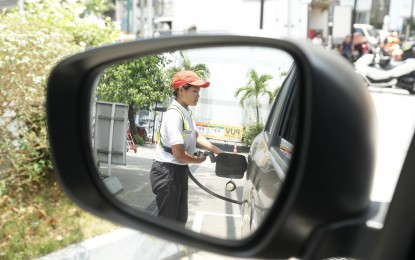
The DOE has also issued special guidelines for deputized agencies in fuel station monitoring and inspection to ensure that these activities are conducted “in a disciplined, coordinated, and orderly manner.”
Among those tapped by DOE for this program are representatives of the LGUs, the Philippine National Police (PNP), the National Electrification Administration (NEA), and the National Power Corporation (NPC).
“Under the Guidelines, deputized agencies are directed to coordinate closely with the DOE in the conduct of inspections, properly identify themselves and clearly communicate the purpose of their visit, observe fuel inventory levels, daily sales, and dispensing practices, verify unusual or bulk purchases when necessary, and document their observations for submission to the DOE for evaluation and appropriate action,” the DOE said.
The Energy department said the guidelines also “recognize the legitimate fuel requirements of essential sectors, including hospitals, transport, agriculture, telecommunications, and government services.”
Along with this move is the tightening of anti-hoarding policies in the downstream oil industry during a State of National Energy Emergency (SNEE) “to help ensure that fuel remains available and accessible to Filipinos” and prevent any artificial shortages.
Among the rules in the anti-hoarding measure are clear definitions of prohibited acts and hoarding indicators; preventive measures, such as temporary fuel purchase limits when necessary and tighter regulation of container-based transactions; enhanced monitoring through the Emergency Petroleum Monitoring System (EPMS) to track inventory levels, supply movements, and fuel distribution; and defined enforcement procedures, including the issuance of Show Cause Orders and timelines for evaluation and case action.
DOE is also re-convening the DOE–Department of Justice (DOJ) Task Force “to receive and act on reports of suspected hoarding, determine violations, and initiate appropriate administrative and criminal actions under existing laws,” the DOE said.
“These Guidelines are meant to ensure that petroleum products continue to move where they are needed, when they are needed, and at a level that protects consumers, supports economic activity, and upholds public order amid the impact of the Middle East conflict on global oil markets,” Garin said. (PNA)