

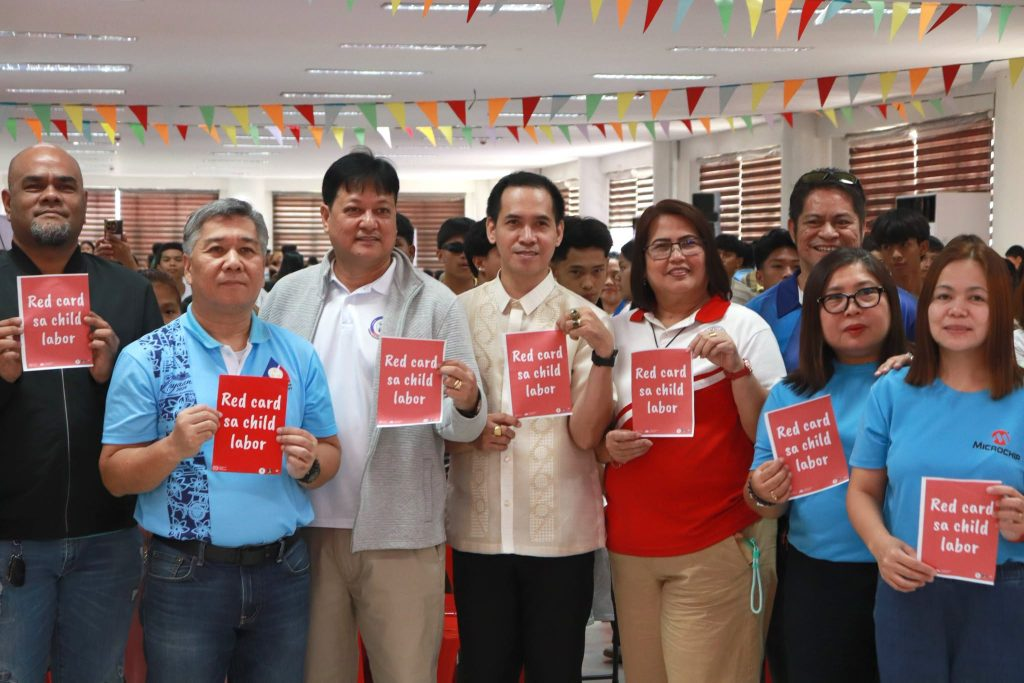
CALAMBA CITY, LAGUNA (PIA) — Poverty remains the leading cause of child labor in CALABARZON and across the country, according to the Department of Labor and Employment (DOLE) IV-A, as it renewed its call for stronger interventions during the observance of the World Day Against Child Labor.
During the Sulong Southern Tagalog program of the Philippine Information Agency and Radyo Pilipinas, DOLE IV-A Senior Labor and Employment Officer Raymond Ramos highlighted the correlation of poverty and child labor, stressing that efforts to eliminate child labor come from addressing vital economic challenges faced by vulnerable families.
“Kung saan may kahirapan, may child labor, at kung saan may child labor, may kahirapan,” Ramos said, emphasizing how economic hardship often pushes children into work at the expense of their education, development, and well-being.
Despite ongoing interventions, Ramos noted that child labor remains a concern in the region. To address the issue, DOLE continues to conduct profiling and monitoring activities to identify children engaged in child labor and connect them with appropriate assistance and support services.
The agency noted that while child labor cases still exist, sustained interventions from government and partner organizations have helped reduce the number of affected children.
Interventions implemented by DOLE include livelihood assistance for parents and families, medical and dental services, mini job fairs, advocacy seminars, and skills demonstrations conducted in partnership with the Technical Education and Skills Development Authority (TESDA) and other government agencies.
Ramos said these initiatives aim to provide families with alternative sources of income, improve access to essential services, and equip communities with knowledge to help prevent child labor.
The discussion formed part of the observance of the World Day Against Child Labour, which carries the international theme, “Red Card to Child Labour: Fair Play for Children, Decent Work for Adults,” led by the International Labour Organization (ILO). In the Philippines, the campaign was localized through the theme, “Ikaw, Ako, Tayo: Sama-samang Pagkilos para sa Batang Malaya.”
The observance reflects the call of DOLE Secretary Francis Tolentino to government agencies, communities, and stakeholders to work together in ending child labor and protecting the rights and welfare of children.
Ramos then clarified that not all forms of work involving children are considered child labor. While children may perform light and age-appropriate tasks that help teach responsibility, child labor refers to work that is hazardous or negatively affects a child’s education, health, growth, and overall development.
Among the worst forms of child labor identified by the Labor department are prostitution, involvement in illegal gambling activities, and hazardous occupations such as mining, charcoal production, and deep-sea fishing.
Meanwhile, the agency recognized the challenge of addressing child labor practices that may be linked to cultural traditions, particularly in some indigenous communities.
While respecting cultural practices, DOLE emphasized that the welfare and best interests of children must remain the top priority.
“Kinikilala natin ang kanilang kultura ngunit ang pinakamahalaga ay maibigay natin ang tamang pangangalaga sa mga kabataan sapagkat sila ang magmamana ng ating hinaharap,” Ramos said.
DOLE-4A encouraged the public to support initiatives that protect children from exploitation and ensure that they are able to enjoy their right to education, development, and a safe environment. (ZLL, CH/PIA-Laguna)